Water doesn’t recognize property lines. Neither do pollinators, birds, or healthy ecosystems. Building resilient communities means looking beyond individual projects and restoring the connections that allow both nature and people to thrive.
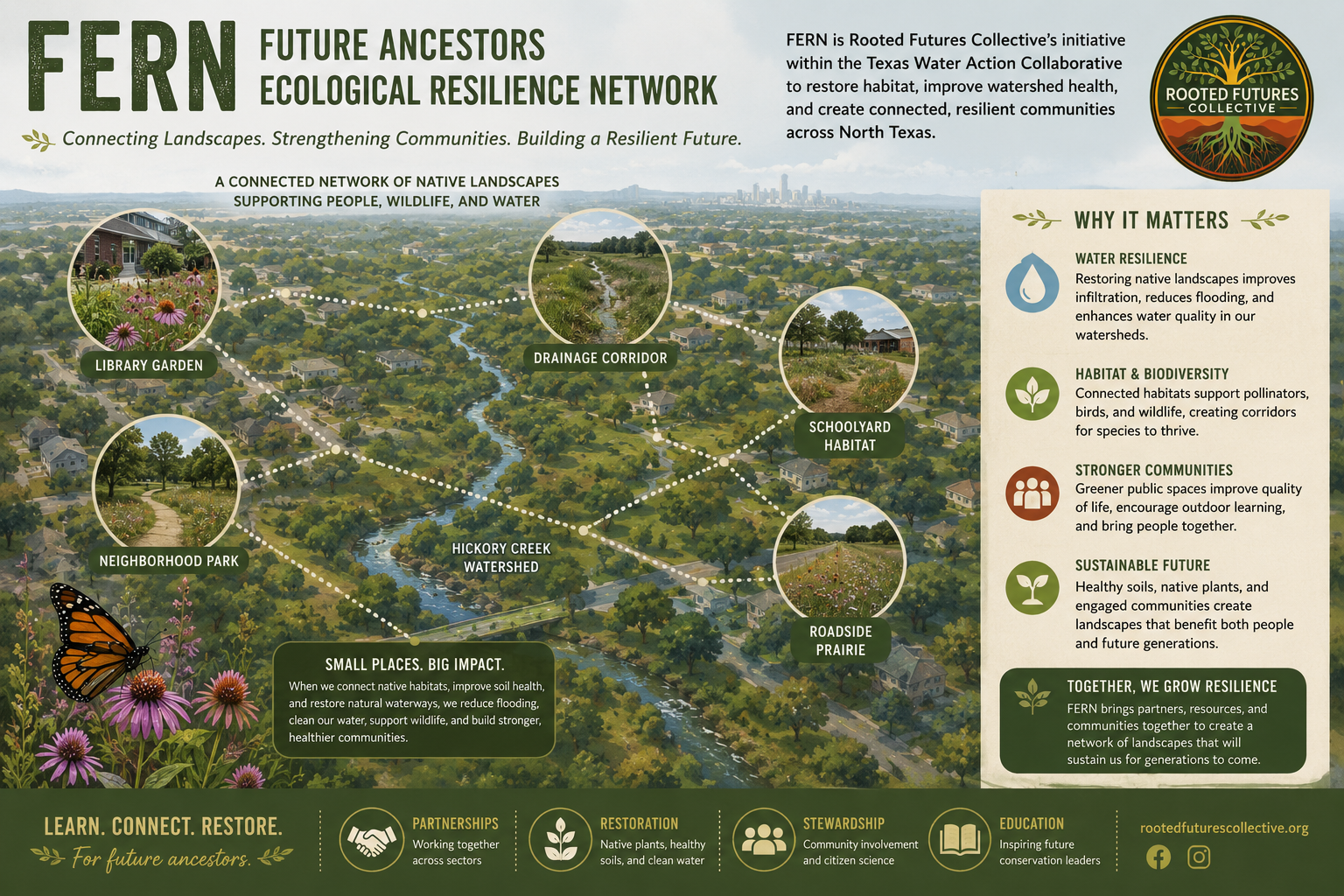
The Future Ancestors Ecological Resilience Network (FERN) is Rooted Futures Collective’s flagship conservation initiative being developed through the Texas Water Action Collaborative (TxWAC), a statewide partnership that supports projects improving water resilience, habitat conservation, and community sustainability across Texas.
FERN represents Rooted Futures’ vision for restoring ecological function across publicly accessible landscapes by reconnecting fragmented habitats, improving watershed health, and creating greener, healthier communities. Rather than focusing on isolated restoration projects, FERN is designed as a connected network of native landscapes that supports both biodiversity and the people who share these spaces.
In North Texas, even small patches of native habitat can have an outsized impact. A pollinator garden at a library, a restored drainage corridor, a pocket prairie in a neighborhood park, or a row of native trees along a walking trail all become more valuable when they function as part of a larger ecological network.
The first phase of FERN is centered in Balch Springs, Texas, where Rooted Futures Collective is working with community partners to identify opportunities for ecological restoration across parks, civic properties, rights-of-way, drainage corridors, and other publicly managed landscapes. The project emphasizes native vegetation, improved habitat connectivity, healthy soils, stormwater infiltration, biodiversity, and community stewardship as complementary pieces of a resilient urban ecosystem.
FERN is about more than planting native flowers. It is about rebuilding ecological relationships.
Native plants provide food and shelter for pollinators, birds, reptiles, amphibians, and mammals. Healthy soils capture rainfall, reduce flooding, improve water quality, and support diverse microbial communities. Connected habitats allow wildlife to move more freely through urban environments while creating opportunities for residents to experience nature where they live, work, and learn.
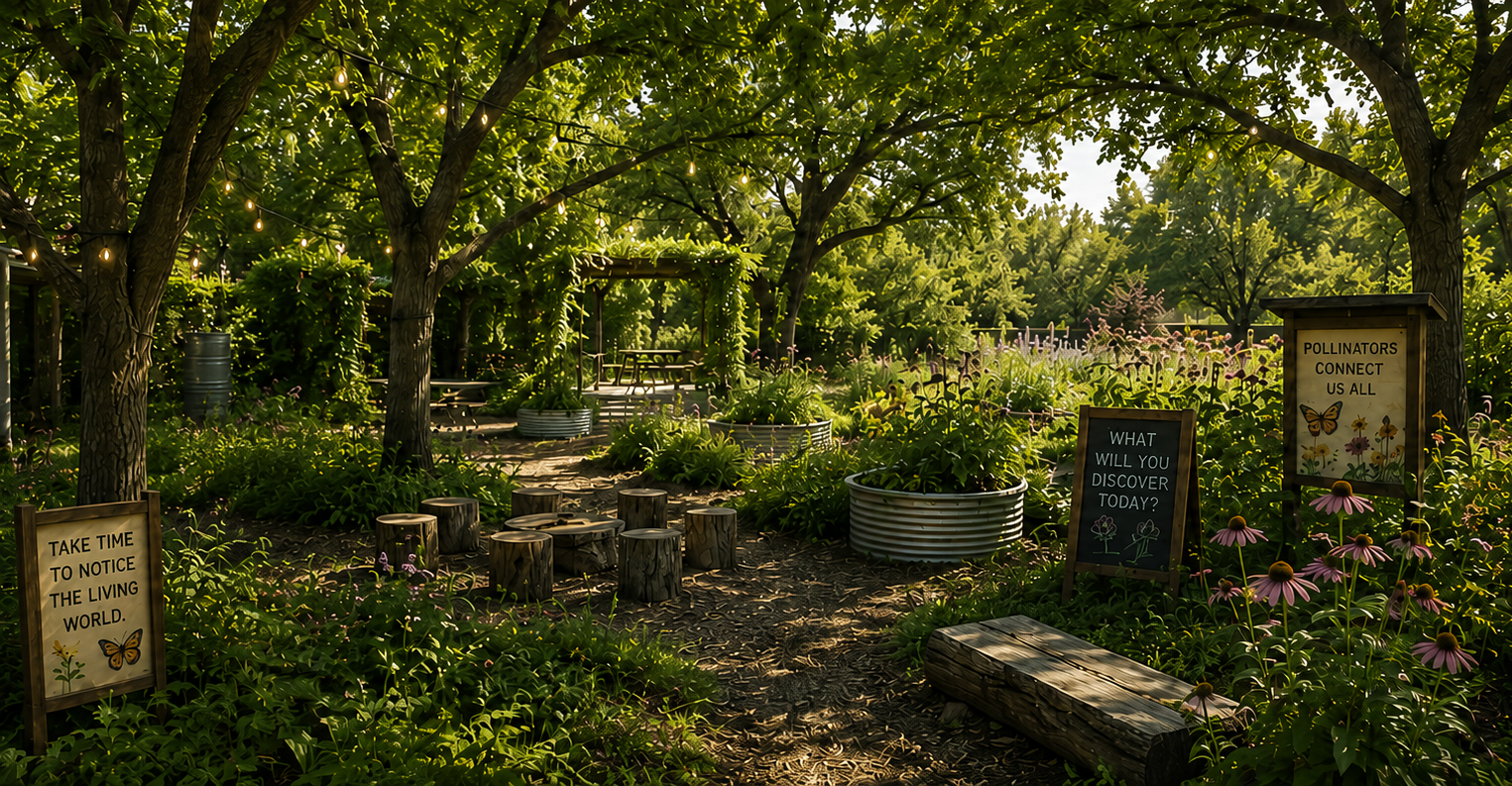
Education, volunteer stewardship, citizen science, and community partnerships are central to the initiative because lasting conservation depends on informed and engaged communities. By combining ecological restoration with public education, FERN seeks to create landscapes that are not only healthier, but better understood and cared for by the people who use them.
As Rooted Futures Collective grows, FERN will continue to serve as the organization’s long-term framework for collaborative conservation, connecting restoration projects, educational programming, research partnerships, and community leadership into a shared vision for a more resilient North Texas.
The challenges facing our environment cannot be solved by any one organization working alone. Through partnerships like Texan By Nature and the Texas Water Action Collaborative and the dedication of local communities, we can begin restoring the ecological connections that sustain both people and wildlife.
Because the landscapes we care for today become the inheritance of the future ancestors who follow.
No responses yet